

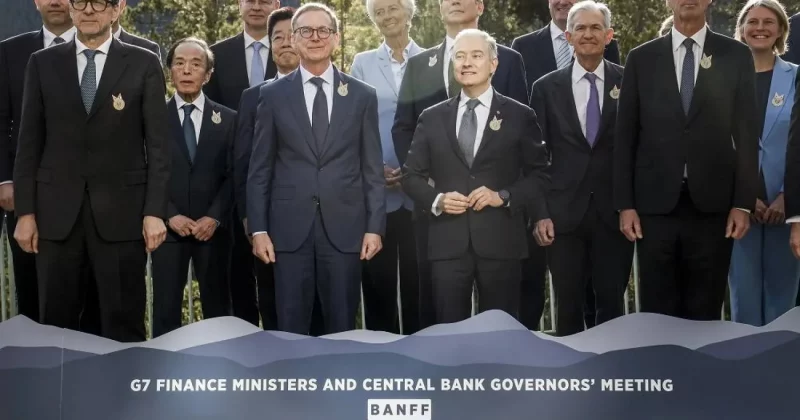
The world’s wealthiest democracies just spent a weekend in the Canadian Rockies talking about one country without actually naming it. G-7 finance ministers wrapped up meetings in Banff, Canada, with a communiqué pledging to address “unsustainable global imbalances” and “non-market policies” in global trade. The target of that language is about as subtle as a neon sign: China.
The timing matters. These talks followed a high-profile summit between former US President Donald Trump and Chinese leaders on trade ties between the world’s two largest economies.
What the communiqué actually says
The final statement from the Banff meetings hit several familiar notes, but with sharper edges than usual. The phrase “unsustainable global imbalances” is diplomatic code for a specific complaint: that certain major economies, China chief among them, run persistent trade surpluses fueled by state subsidies, currency management, and industrial policies that don’t play by free-market rules.
What the communiqué conspicuously avoided was any direct reference to US tariffs. This despite the fact that tariffs imposed under the Trump administration are widely expected to drag on global GDP.
Bank of Canada Governor Tiff Macklem outlined four leadership priorities for the G-7 coming out of the meetings: reducing policy uncertainty, correcting global imbalances, navigating tariff discussions, and improving the broader trading system.
The IMF gets a homework assignment
One concrete outcome from Banff: the G-7 encouraged the International Monetary Fund to deepen its analysis of “unsustainable global imbalances” and develop appropriate policy responses. The IMF agreed.
The discussions in Banff also set the table for the upcoming June G-7 leaders’ summit, where heads of state will pick up where their finance ministers left off.
What this means for markets and crypto
For crypto investors, the Banff meetings offered no direct policy signals. No digital asset frameworks were discussed in the communiqué outcomes, and no specific tokens or platforms were addressed. But the macro backdrop matters enormously. Policy uncertainty of the kind Macklem identified as a G-7 priority has historically correlated with increased capital flows into Bitcoin and other digital assets as hedges against traditional market volatility.