

Key Takeaways
- Bitcoin slipped under $64,000 on Aug. 10 after Strategy sold 1,690 coins to repurchase STRC preferred stock.
- The price reversal triggered over $47 million in long position liquidations across the crypto market.
- Strategy CEO Phong Le defended the asset sale, while critics like Peter Schiff questioned its stock value.
Volatility and Market Liquidations
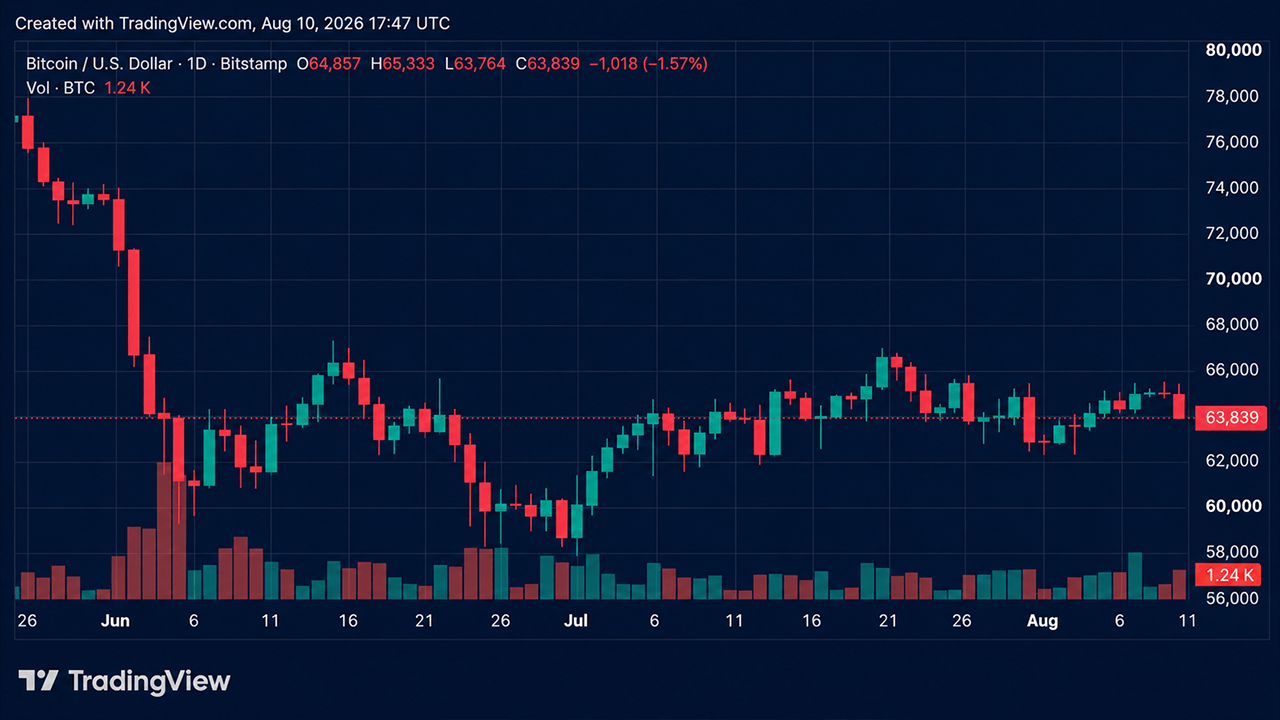
Bitcoin (BTC) slid below $64,000 Monday afternoon, snapping a multi-day streak of marginal gains after bitcoin treasury giant Strategy sold 1,690 bitcoins to fund preferred stock repurchases. The downturn comes against a backdrop of regulatory and technical headwinds, including controversy surrounding the CLARITY Act vote and a BIP-110 chain split.
Yet, a few hours before tumbling, bitcoin appeared on course to replicate the price action that saw it breach the $65,000 threshold on Aug. 7. In fact, as shown by the daily chart, the cryptocurrency tapped an intraday high of $65,416 just after 6 p.m. EST on Sunday. Although it retreated slightly, the cryptocurrency held the $65,000 level into the early hours of Aug. 10.
After breaking support shortly after 8 a.m. EST, bitcoin tumbled to just under $63,770, marking a daily loss of nearly 2%. The downturn erased over $20 billion from its market capitalization—dropping it from $1.3 trillion to $1.28 trillion in under four hours—and wiped out more than $47 million in long leveraged positions over 24 hours. By comparison, short liquidations topped $12 million during the same period.
As reported earlier by Bitcoin.com News, Strategy, which sold the 1,690 BTC between Aug. 3 and Aug. 9, achieved an average price of $64,262 per coin. Following the sale, Strategy’s BTC holdings dropped to 840,447 coins, with an average purchase price of $75,385 per coin. Using the $108.6 million generated from the sale, Strategy repurchased 1,152,020 STRC shares.
Before the latest sale, Strategy also disclosed that it had sold 1,638 BTC between Jul. 27 and Aug. 2 for approximately $104.7 million. Commenting on the latest sale, Strategy CEO Phong Le said:
“Our USD Reserve and Duration are now at all-time highs. In 2.5 months, we added nearly $3.8 billion and grew both more than 5X. This is the Digital Credit Capital Framework at work.”
While Le and Strategy Chairman Michael Saylor have framed the maneuver positively, critics and members of the crypto community were not convinced. Peter Schiff, who has repeatedly branded Strategy a Ponzi scheme, questioned the logic of buying or holding the company’s common stock.
“You have now reduced the Bitcoin YTD yield by 87% since May 25th (QTD it’s minus 6.4%). At this rate, by next week the yields will be negative. How much Bitcoin per share are you willing to destroy to keep your STRC Ponzi scheme going? Why should any Bitcoiner own MSTR common,” Schiff asked in an X post replying to Saylor.
Pushing back against critics, macro strategist Dan Hillery posted a narrative on X framing Strategy’s move as a disciplined balance sheet optimization. Hillery argued that selling a small portion of bitcoin to repurchase STRC shares trading at a discount or to fortify preferred dividend reserves is an accretive capital management step—one that reduces the company’s long-term cost of capital and strengthens its financial runway.
In subsequent responses to pushback on his post, Hillery addressed concerns over the drop in MSTR’s “Bitcoin yield,” maintaining that optimizing capital structure and securing preferred obligations during market volatility takes precedence over short-term per-share yield metrics, ultimately protecting equity value over a longer time horizon.