

Key Takeaways
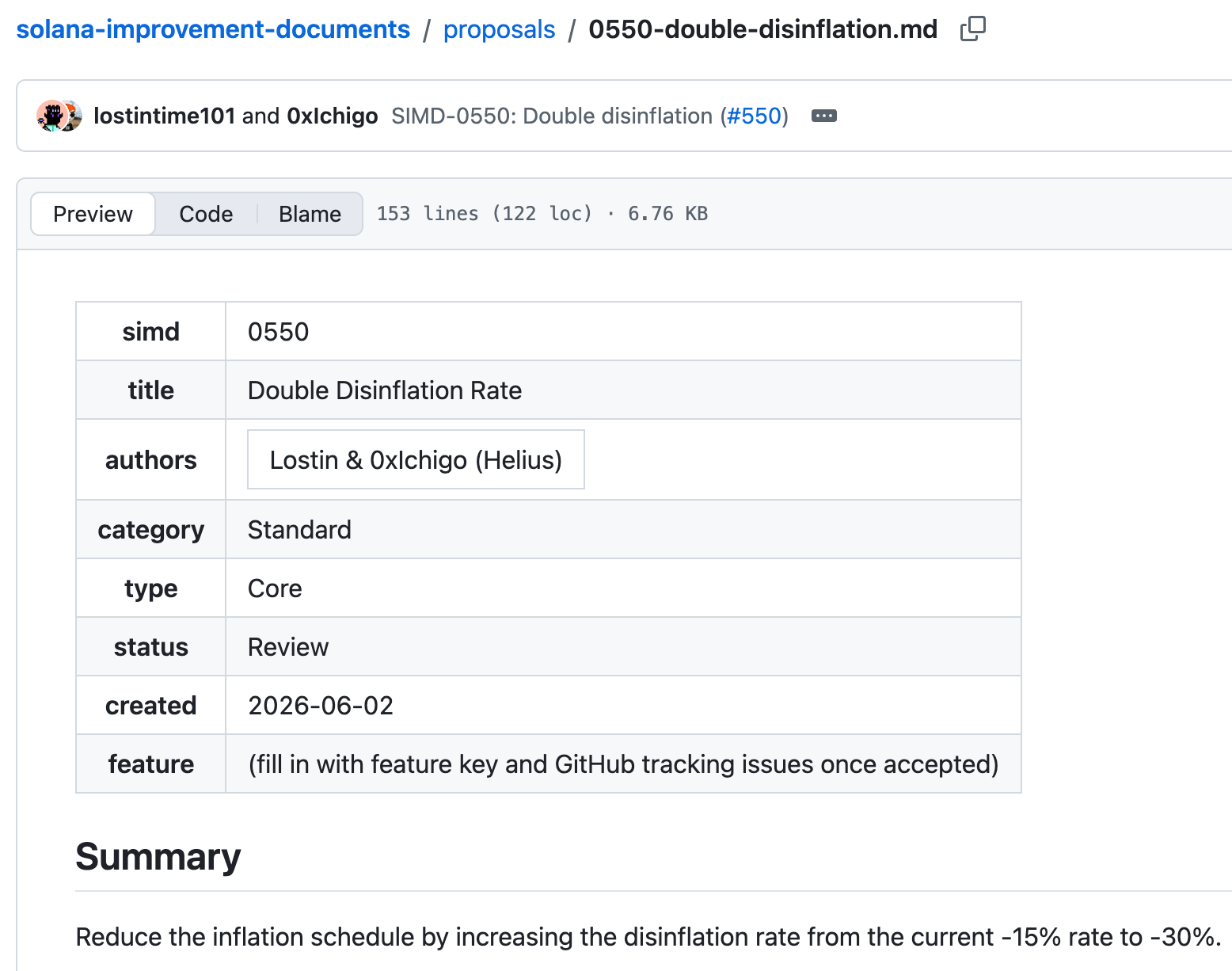
- Solana’s SIMD-550 would double disinflation to 30%, pushing staking yields toward 2.25% by year 3.
- 21Shares says SIMD-550 and SIMD-553 could cut SOL emissions by up to $1.5B over 6 years.
- Solana voters now face SIMD-550, with about 30 validators potentially unprofitable by year 3.
21Shares Sees Solana Emissions Falling by up to $1.5 Billion
Solana is moving toward a leaner monetary model that could make SOL scarcer while reducing one of the network’s biggest attractions for holders: staking income.
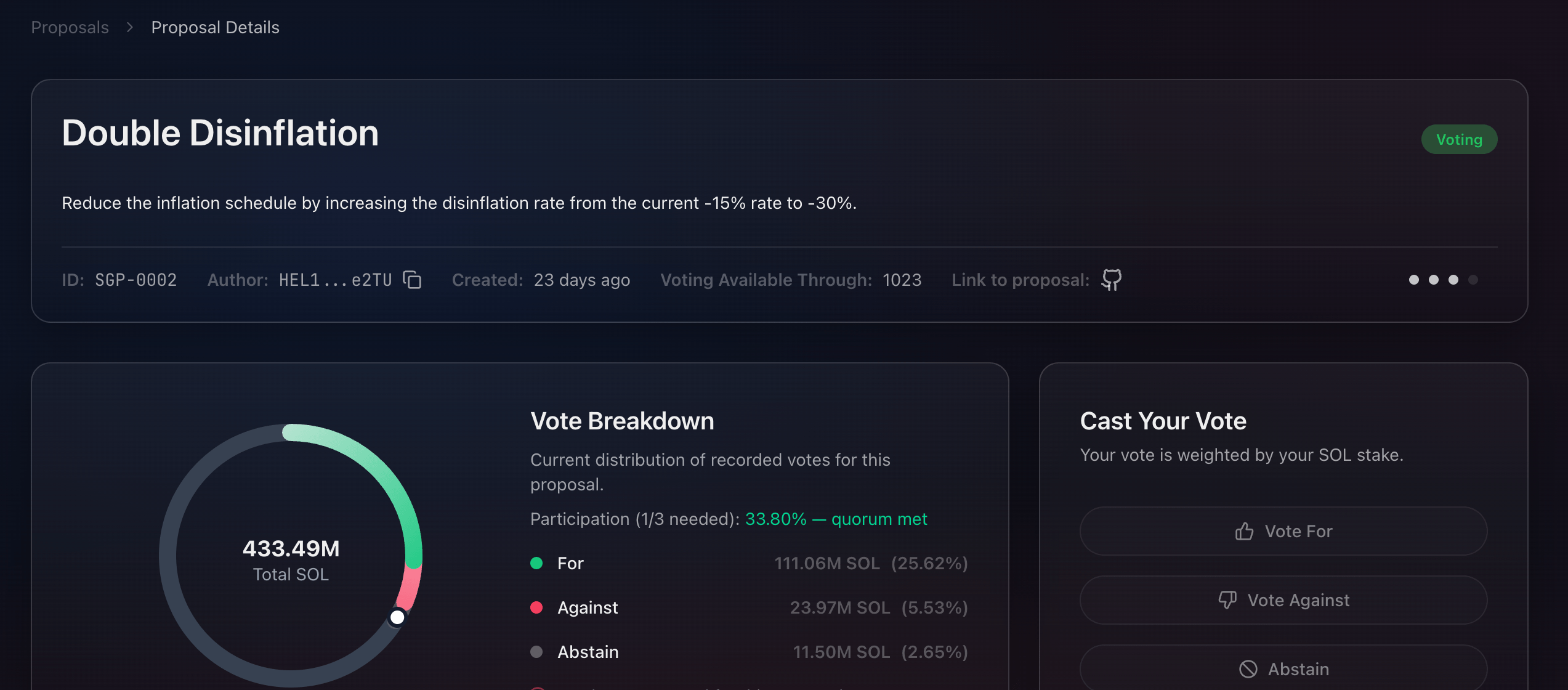
Two proposals are driving the shift. SIMD-550, proposed by Helius and now in governance voting, would double Solana’s annual disinflation rate from 15% to 30%. So far, major validators including Forward Industries and Blueshift have voted in support of the proposal, while Everstake and P2P.org have voted against it.
SIMD-553, submitted by Temporal and approved in July, introduces additional token burns tied to requested compute units. Together, the changes could reduce SOL emissions by an estimated $1.4 billion to $1.5 billion over six years, according to Matt Mena, senior crypto research strategist at 21Shares.
The immediate cost is lower yield. Solana staking currently returns roughly 5.25%, with protocol inflation providing the largest component alongside transaction fees and MEV revenue.
Staking Yield Could Fall Toward 2.25%
Under SIMD-550, Solana would reach its 1.5% terminal inflation rate around the first half of 2029 instead of roughly 2032. Projected nominal staking yield would fall to about 4.34% in year one, 3% in year two, and 2.25% in year three.
SIMD-553 would simultaneously increase SOL destruction. At current activity levels, daily burns could rise from roughly 600 to 800 SOL to between 7,500 and 9,000 SOL. That remains below current inflation, but materially changes the supply trajectory.
“We believe inflation should be tied to economic performance and growth to help offset the decline in staking revenue,” Mena wrote.
Validator economics remain a concern. Depending on the final fee structure, voting costs could rise significantly, while lower inflation reduces rewards. Under SIMD-550 estimates, two validators could become unprofitable in year one, rising to about 30 by year three.
Lower Yield Could Push Capital Into Solana DeFi
The proposals are also designed to change where SOL capital sits.
About 67.9% of SOL is currently staked, nearly double Ethereum’s roughly 34.1%. Lower passive returns could encourage holders to move capital into lending, trading, and other decentralized finance (DeFi) applications.
That could matter if increased activity lifts transaction fees, MEV and other revenue enough to replace falling inflation rewards.
Mena argues the broader supply signal may also support SOL’s investment case. Ethereum’s EIP-1559 burn mechanism and Cosmos’s 2023 inflation cut were both followed by short-term price gains, although wider market conditions played major roles.
For SOL holders, the equation is becoming clearer: less yield today in exchange for lower dilution tomorrow. Whether that proves bullish will depend on whether network usage grows fast enough to make the trade worthwhile.