

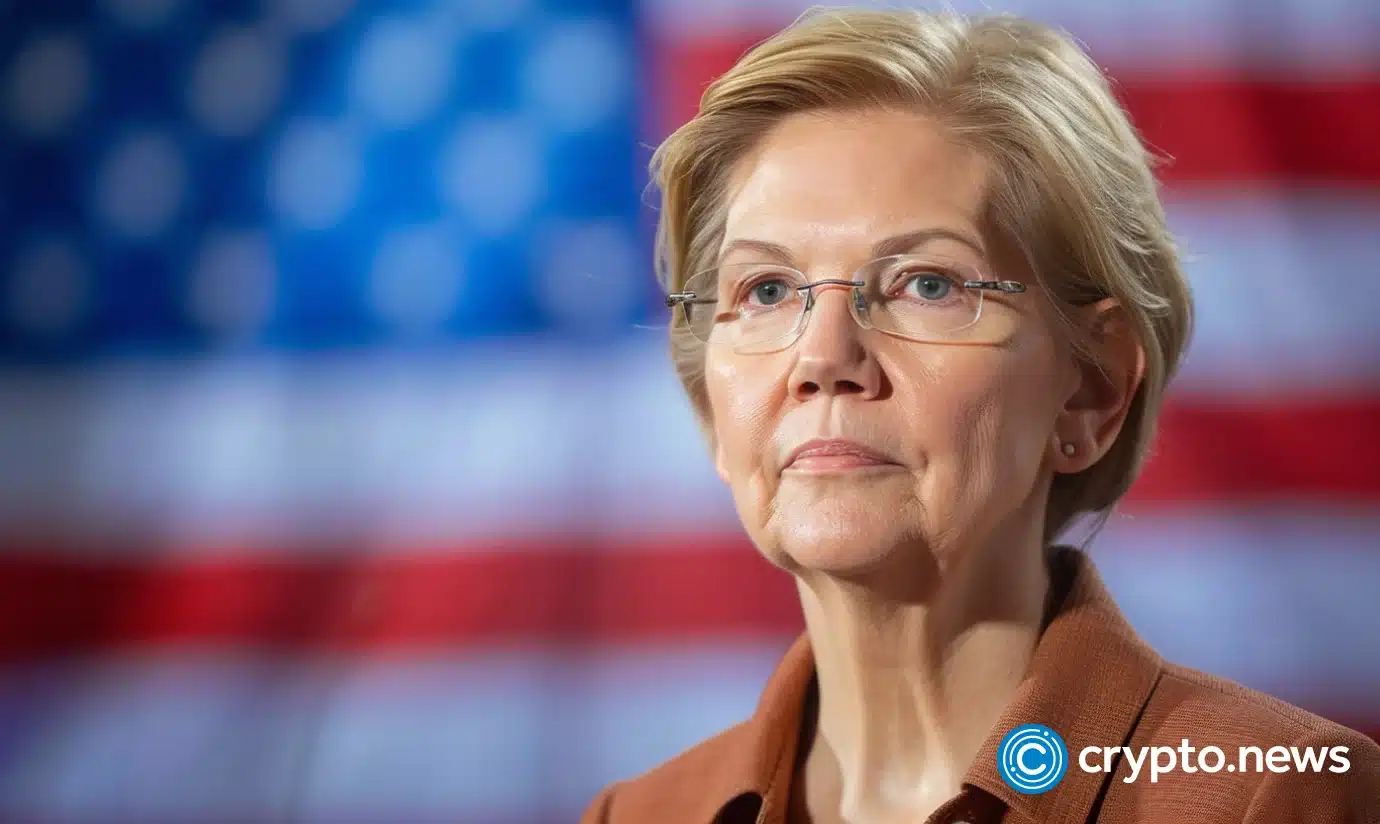
Senator Elizabeth Warren supports establishing federal rules for digital assets but has rejected the CLARITY Act in its current form, citing unresolved concerns over corruption, consumer protection, national security and financial stability.
Summary
- Warren supports crypto legislation but said the CLARITY Act lacks necessary safeguards.
- Her objections cover conflicts of interest, consumer risks, national security and regulatory arbitrage.
- Senate leaders took no procedural action to move the bill toward a weekend vote.
- Polymarket traders placed its chance of becoming law in 2026 at approximately 17%.
Warren says CLARITY Act falls short
According to CoinDesk, Warren said the U.S. crypto industry needs a clear regulatory framework but argued that the current proposal does not adequately protect investors or the wider financial system.
The Massachusetts Democrat identified several areas where she believes the legislation remains insufficient. These include safeguards against political corruption, protections for consumers and measures intended to limit national security and economic risks.
Warren has also warned that poorly designed crypto legislation could weaken regulators and allow large digital asset companies to exploit gaps between federal agencies. Her opposition therefore focuses on the terms of the CLARITY Act rather than rejecting crypto regulation altogether.
The bill seeks to establish clearer federal oversight of digital asset issuance, trading platforms and other market participants. It would also define how responsibilities are divided among agencies, including the Commodity Futures Trading Commission and the Securities and Exchange Commission.
Supporters argue that those rules would reduce legal uncertainty for U.S. crypto businesses. Warren, however, maintains that regulatory clarity must not come at the expense of consumer safeguards or financial stability.
Trump’s crypto income adds to ethics dispute
Warren’s position follows her earlier scrutiny of President Donald Trump’s digital asset interests while lawmakers considered the market structure bill.
As crypto.news reported in July, Warren asked Trump to disclose his crypto earnings between Jan. 1 and July 15, 2026. The request followed a federal financial filing that showed approximately $1.4 billion in income from digital asset ventures during 2025.
Trump’s disclosure, filed June 30 under Office of Government Ethics rules, listed income connected to Official Trump and World Liberty Financial, the Trump family’s crypto business.
Warren argued that those holdings raised questions about whether senior elected officials could influence legislation that affects the value of their own assets. She asked Trump to provide the additional information voluntarily by July 23.
Conflict-of-interest restrictions involving senior federal officials have since remained among the largest obstacles in CLARITY Act negotiations. Lawmakers have also discussed illicit finance provisions, decentralized finance oversight, stablecoin rewards and the scope of the CFTC’s authority.
CLARITY Act misses path to weekend vote
Prospects for an immediate Senate vote faded Thursday after Majority Leader John Thune did not file cloture on a motion to proceed to the bill.
A cloture filing would begin the procedural countdown needed to limit debate and bring the legislation toward floor consideration. Without it, a weekend vote became increasingly difficult even if senators remained in Washington beyond Friday.
Thune instead filed cloture on a substitute amendment to H.R. 6500, the motion to proceed to the Protect College Sports Act of 2026 and Todd Blanche’s nomination to be attorney general.
The CLARITY Act was absent from the list despite continued negotiations among Republicans, Democrats and the White House.
Prediction markets cut 2026 passage odds
Prediction-market traders have become increasingly doubtful that Congress will approve the legislation this year.
Polymarket placed the probability of the CLARITY Act being signed into law in 2026 at approximately 17% on Thursday, representing a 48% decline over the measured period.
Warren’s opposition adds to the challenge facing Senate leaders, who need Democratic support to overcome the chamber’s 60-vote threshold. Further movement will depend on whether negotiators can reach agreements on ethics, consumer protection, illicit finance and agency authority before lawmakers leave for the August recess.