
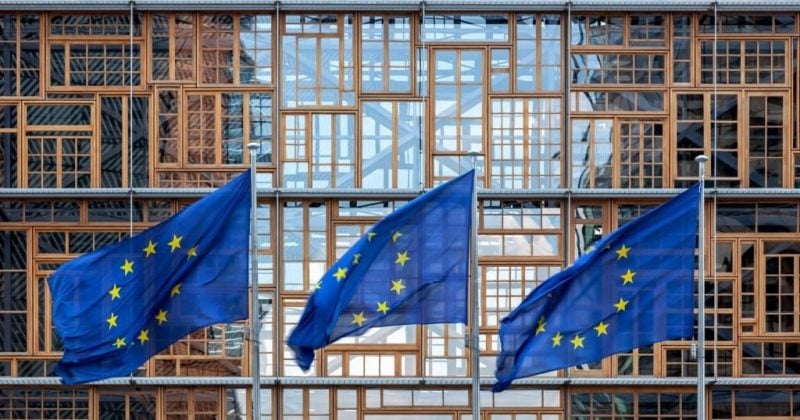
The European Union is negotiating to join a US-led coalition designed to lock down supply chains for the world’s most sensitive technologies. The alliance, described as a “trusted network” of partners, focuses on AI infrastructure, advanced semiconductors, and the critical minerals needed to build them.
What the alliance actually looks like
The initiative continues a push that gained momentum under the Trump administration to reduce Western dependency on China for essential technology inputs.
The EU’s interest in joining isn’t a sudden pivot. Brussels has been building its own parallel infrastructure for years. The European Chips Act is designed to boost domestic semiconductor production. The Critical Raw Materials Act targets the minerals that go into everything from EV batteries to GPU substrates. And the transatlantic US-EU Trade and Technology Council has been the diplomatic scaffolding for exactly this kind of cooperation.
Joining the US-led alliance would layer another coordination mechanism on top of those existing frameworks. It would also signal that Europe is willing to align more explicitly with Washington on technology containment strategies aimed at Beijing.
Why crypto should be paying attention
This alliance doesn’t mention Bitcoin, Ethereum, or any crypto protocol by name. It doesn’t need to. The hardware it targets sits at the foundation of crypto’s physical layer.
Bitcoin mining operations consume enormous quantities of specialized chips. Large-scale proof-of-work mining depends on ASICs, which in turn depend on advanced semiconductor fabrication, primarily concentrated in Taiwan and South Korea.
A growing share of crypto infrastructure, from validator nodes to decentralized storage networks, runs on cloud platforms powered by GPUs and custom AI accelerators. Supply chain restrictions or preferential access arrangements for allied nations could shift the cost structure for these services.
The rare earth elements and specialty metals required for semiconductor fabrication are overwhelmingly processed in China. Cobalt, lithium, gallium, germanium: these aren’t abstract commodities. They’re the physical preconditions for the hardware that makes decentralized networks possible.
The geopolitical chess match
China has responded to Western containment efforts with its own export controls on critical minerals like gallium and germanium, which are essential for chip production. Beijing has also accelerated domestic semiconductor development, though it remains years behind TSMC and Samsung at the leading edge.
The EU’s decision to negotiate entry into this alliance reflects a broader realignment. For decades, European trade policy tried to maintain balanced relationships with both Washington and Beijing. That balancing act has become increasingly difficult as technology becomes the primary arena for great power competition.